

Table of Contents
- Durable Graphic Tees for Daily Wear: What Actually Matters
- Best Fabric for Durable T-Shirts: Weight, Weave, and What to Look For
- How to Identify Quality Screen Printing Before You Buy
- Snarky Tails Picks: Durable Graphic Tees Built for Daily Wear
- How to Wash Graphic Tees to Prevent Cracking
- Fit, Construction, and Body Type Suitability
- Conclusion: Building a Rotation That Lasts
- Frequently Asked Questions
Last Updated: September 27, 2026
Durable Graphic Tees for Daily Wear: What Actually Matters
Most printed tees fail the same way: seams twist, collars ripple, and artwork cracks by wash fifteen. For durable graphic tees for daily wear, the fix isn't a brand name, it's reading three specs: fabric weight, cotton type, and print method.
Best Fabric for Durable T-Shirts: Weight, Weave, and What to Look For
The best fabric for durable t-shirts is a heavier ring-spun cotton knit, typically 5.5 oz or more: denser fabric resists thinning, holds its shape, and gives the print a stable surface. Lighter knits feel great new, then go sheer fast. But weight alone isn't the whole story, weave, yarn type, and finishing matter too.
GSM and Ounces: Reading the Numbers
GSM stands for grams per square meter, the metric measure of fabric weight; ounces per square yard is the American equivalent. Higher numbers mean a denser knit.
| Fabric Weight | Feel | Best For |
|---|---|---|
| 4.5 oz | Light, soft, breathable | Warm weather, layering |
| 6.1 oz | Substantial, structured | Daily wear, print longevity |
| 7 oz and up | Heavy, rigid at first | Workwear, long-term rotation |
Matching Fabric Weight to Your Climate and Body
Heavier isn't always better, the right weight depends on your climate and how you run:
- Hot and humid climates (Gulf Coast, Southeast): A 4.5 oz to 5.5 oz ring-spun cotton breathes better and dries faster. Heavier knits trap heat and can feel clammy by midday.
- Temperate climates (Mid-Atlantic, Pacific Northwest): 5.5 oz to 6.1 oz gives you a three-season shirt that holds its shape without overheating.
- Cold climates (Upper Midwest, Northeast): 6.1 oz to 7 oz provides insulation and a structured drape that layers well under flannels or jackets.
- Runs warm vs. runs cold: If you overheat easily, drop one weight tier. If you are always cold, go up one.
Weave Structure: Jersey vs. Interlock
Most graphic tees use a single jersey knit: fine, stretchy, smooth-faced with a looped back. It takes screen printing well but distorts over time if the yarn is weak.
Ring-Spun vs. Open-End Cotton
Ring-spun cotton twists and thins fibers into a fine, tight yarn for a smoother, stronger, softer fabric. Open-end cotton is made faster and cheaper from coarser yarn, so it feels rougher and pills sooner.
Combed vs. Carded Cotton
Combed cotton is brushed to remove short fibers and impurities before spinning, making yarn smoother and stronger. Carded cotton skips that step, leaving short fibers that work out as pills. Combed ring-spun is the gold standard for durable graphic tees.
Pre-Shrunk vs. Tubular Construction
Two construction details affect fit after washing:
- Pre-shrunk: Fabric is washed and dried before cutting, so shrinkage stays under 3%. Without it, a cotton tee can shrink a full size after one hot wash.
- Tubular knit: The body is knit in a continuous tube with no side seams, eliminating side-seam twisting. Tubular tees fit slightly boxier.
A pre-shrunk, tubular, ring-spun 6.1 oz tee is about as durable as cotton gets without synthetic blends.
How to Identify Quality Screen Printing Before You Buy
Quality screen printing sits flush with the fabric, stretches with the knit, and shows crisp edges with no thick plastic layer. A raised, rubbery ridge along the design edge means the print will crack.
Stitch Density and Ink Depth
Three details separate a print that survives years from one that peels in months:
- Stitch density: tighter stitching at the hem and collar prevents seam blowout
- Ink depth: a properly cured print bonds into the cotton fibers rather than sitting on the surface
- Edge sharpness: crisp lines mean correct screen alignment and no over-applied ink
Snarky Tails Picks: Durable Graphic Tees Built for Daily Wear
Snarky Tails makes graphic tees for pet owners on two fabric platforms: a 4.5 oz ring-spun cotton tee and a 6.1 oz garment-dyed heavyweight, both pre-shrunk and made in the USA.
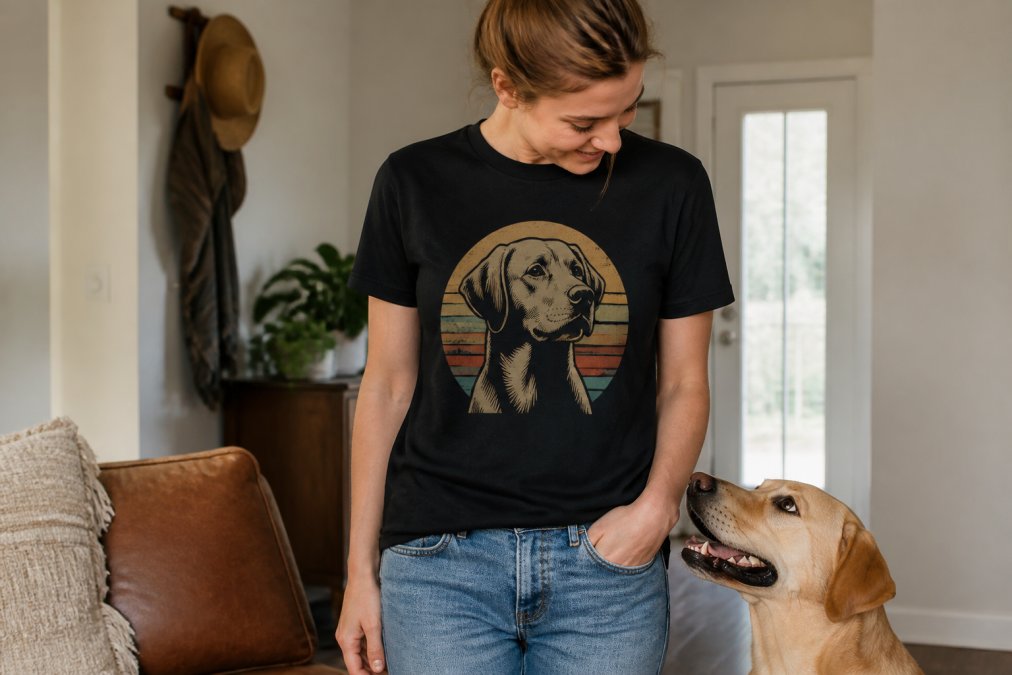
Here is how the two lines compare.
| Line | Fabric Weight | Cotton | Best For | Price |
|---|---|---|---|---|
| Gildan 64000 tees | 4.5 oz | 100% ring-spun cotton | Breathable daily wear | $29.99 |
| Comfort Colors 1717 tees | 6.1 oz | 100% ring-spun US cotton | Heavyweight rotation | $33.99 |
Comfort Colors 1717 Line: 6.1 oz Heavyweight Tees ($33.99)
The Comfort Colors 1717 is the heavyweight option. The 6.1 oz garment-dyed cotton has a vintage look and broken-in feel, but density earns its place: tubular knit construction means no side seams to twist, and double-needle stitching reinforces stress points.
Are You Still Here Cat T-Shirt →
Gildan 64000 Line: 4.5 oz Lightweight Tees ($29.99)
The Gildan 64000 is the lighter, more breathable platform. The 100% ring-spun cotton gives it a soft-hand feel, a relaxed true-to-size fit, and that "I've had this forever" softness out of the package.
How to Wash Graphic Tees to Prevent Cracking
The single biggest cause of cracked prints is heat. Washing graphic tees in cold water and drying on low heat, or air-drying entirely, prevents the ink from becoming brittle and flaking off.
A wash routine that protects the print:
- Turn the shirt inside out before washing
- Wash in cold water, max 90F
- Skip bleach entirely
- Tumble dry on low, or hang to dry
- Iron on low heat, never directly on the print
- Skip dry cleaning
What Actually Happens to a Print After 20 Washes
Most marketing pages claim prints "last wash after wash" without showing it. Here's the pattern most people see tracking a screen-printed tee through 20 cold-water, low-heat cycles:
- Washes 1-5: The print looks identical to day one. Any softening is in the fabric, not the ink.
- Washes 6-10: Slight dulling of the ink surface on darker colors. Edges remain crisp. No cracking.
- Washes 11-15: A faint crackle may appear at the highest-stretch points, across the chest, over the shoulder blades, and where the print crosses a seam. This is normal and does not mean the print is failing.
- Washes 16-20: The crackle pattern stabilizes. The print is still fully intact and legible. Colors may fade 5-10% on very dark garments.
How to Repair Common Graphic Tee Problems
Even durable tees develop issues over time. Here's how to fix the most common ones.
When to Retire a Graphic Tee
Not every tee is worth saving. Retire a shirt when:
- The fabric has thinned to the point where you can see through it in direct light
- The collar has lost its shape permanently and no longer sits flat
- The print has peeled off in chunks rather than cracked in lines
- The seams have blown out at the shoulder or hem and cannot be re-stitched
Fit, Construction, and Body Type Suitability
Fit consistency is where most graphic tees quietly fail: great fabric means nothing if the shoulders sit wrong or the length rides up when you raise your arms.
- Shoulder seam: it should sit at the edge of your shoulder, not hang past it
- Body length: long enough to stay tucked if you move around
- Collar retention: a ribbed collar that springs back holds its shape; a flimsy one ripples
- Chest room: enough for a full range of motion without pulling the print tight
Conclusion: Building a Rotation That Lasts
A durable graphic tee is a numbers game: heavier fabric, ring-spun yarn, and a print that bonds into the cotton instead of sitting on top of it. Get those three right and one shirt can carry years of daily wear.
Frequently Asked Questions
Which t-shirt brand is the most durable?
Durability comes down to fabric weight, stitch density, and print method. Heavier fabrics (6.1 oz and up) with double-needle stitching and tubular knit construction hold up longer than lightweight alternatives. Snarky Tails uses Comfort Colors 1717 (6.1 oz, ring-spun US cotton) for their vintage line and Gildan 64000 (4.5 oz) for their lightweight line. Both are pre-shrunk and built for wash durability.
What fabric weight is best for durable graphic tees?
For daily wear that survives repeated washing, look for 5.5 to 6.5 oz per square yard. Snarky Tails' Comfort Colors 1717 tees come in at 6.1 oz, which gives you high-density fabric without feeling stiff. Lighter options like the 4.5 oz Gildan 64000 work well for warmer weather but may show wear sooner with heavy rotation.
How can you tell if a graphic tee is high quality?
Check three things: fabric weight (GSM or ounces per square yard), stitch density at the seams, and print method. Quality screen printing sits smooth on the fabric with crisp edges and no cracking when you stretch it gently. Reinforced seams and double-needle stitching at the hem and collar are signs of garment construction that lasts.
How do you wash graphic tees to prevent cracking?
Turn the shirt inside out, wash cold (max 90F), and tumble dry on low heat. Avoid bleach and fabric softener, which break down the print. Snarky Tails recommends cold machine wash, low tumble dry, and no dry cleaning. Following these steps protects print longevity and colorfastness across dozens of washes.
Are graphic tees still in style for 2026?
Yes. Graphic tees remain a wardrobe staple, especially in the vintage aesthetic and casual styling categories. The shift is toward premium staples: heavier fabrics, hand-drawn artwork, and designs that feel personal rather than mass-produced. Pet-themed humor tees from brands like Snarky Tails fit that demand for everyday essentials with personality.