

Table of Contents
- Why Graphic Tees Shrink: Understanding Fabric Behavior
- How to Wash Graphic Tees Without Shrinking
- Drying Methods That Protect Against Heat Damage
- Preventing Graphic Print Cracking and Peeling
- How to Fix a Shrunken Shirt: Restoration Techniques
- Fabric-Specific Care: Cotton, Synthetic Blends, and Beyond
- Storage and Long-Term Garment Maintenance
- Frequently Asked Questions
Last Updated: September 20, 2026
Why Graphic Tees Shrink: Understanding Fabric Behavior
Graphic tees shrink because fabric fibers relax and contract when exposed to heat and agitation. Most cotton-based garments lose 3-5% of their size after the first wash if not treated carefully. Understanding what causes shrinkage helps you learn how to prevent graphic tees from shrinking and protect your favorite designs.
Heat is the primary culprit: when water temperature rises, fabric fibers expand and contract as they dry, permanently altering dimensions. Agitation during washing also damages fibers by forcing them against each other repeatedly.
The graphic print itself faces additional stress. Screen-printed designs crack and peel when the fabric underneath shrinks at a different rate than the ink. This mismatch creates tension that breaks the print layer away from the shirt.
Pre-shrunk fabrics have already undergone controlled shrinkage at the factory, but this doesn't make them immune. Additional washing can still cause minor shrinking, especially if you ignore care instructions.
How to Wash Graphic Tees Without Shrinking
Prevent shrinkage by controlling three variables: water temperature, wash cycle intensity, and drying method.
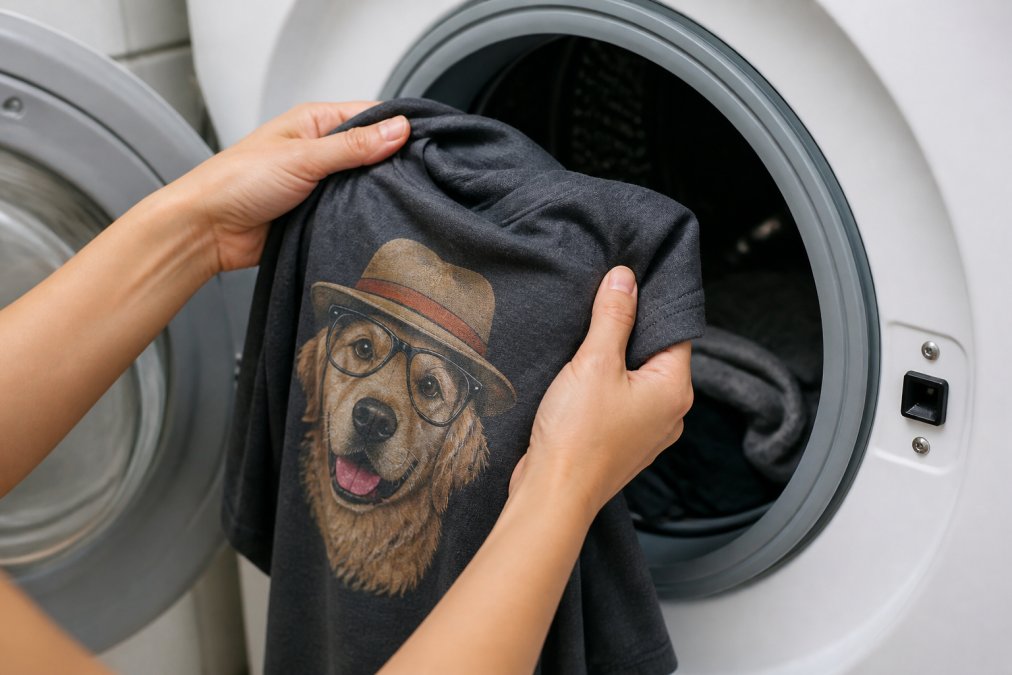
Use Cold Water Wash Settings
Cold water wash is non-negotiable for graphic tees. Hot water accelerates fiber relaxation and causes permanent shrinkage, while cold water keeps fibers stable and prevents thermal expansion that damages fabric and print.
Cold water removes dirt and sweat just as effectively as warm water while protecting your investment.
Run cold water every time. For heavily soiled garments, pre-treat stains with a gentle stain remover before washing.
Select Gentle Cycle and Lower Agitation
Gentle cycle settings reduce mechanical stress on fabric fibers. Standard cycles use aggressive agitation that forces fibers to rub against each other, causing breakdown and contraction.
Gentle or delicate cycles use slower spin speeds and shorter wash times, protecting both fabric and print while reducing cracking and peeling.
Select delicate cycle and low agitation settings on your machine.
Turn Shirts Inside Out Before Washing
Turning your graphic tee inside out protects the printed design from direct contact with other garments and the washer drum, keeping the print away from friction.
This simple step reduces print cracking dramatically by creating a protective barrier.
Always flip your shirt before loading the washer.
Drying Methods That Protect Against Heat Damage
How you dry your graphic tee matters as much as how you wash it. Air drying eliminates heat damage entirely.
Air Drying vs. Machine Drying
Machine drying with high heat causes immediate and severe shrinkage, forcing fabric fibers to contract rapidly and causing permanent damage.
Air drying prevents heat damage completely, maintaining your shirt's original size and shape.
Skip the dryer for graphic tees. Hang-dry or lay-flat dry instead. If you must use a machine, select the lowest heat setting and remove while slightly damp.
Plan ahead and start drying immediately after washing; your shirt will be dry within 24 hours in most conditions.
Drying Rack vs. Hanger Mechanics
A drying rack distributes weight more evenly than a hanger. Hanging wet shirts stretches shoulder seams, creating permanent deformation over time.
Use a drying rack or flat-lay method to distribute weight evenly across the garment instead of concentrating at the shoulders.
If hanging, use a wide, padded hanger. Better yet, fold your shirt loosely over a drying rack rail.
Position your drying rack away from direct sunlight to prevent fading graphic prints.
Preventing Graphic Print Cracking and Peeling
Screen-printed graphics are vulnerable to shrinkage forces. When fabric shrinks faster than the ink layer, the print cracks and peels away.
If the shirt shrinks 5% but the ink only shrinks 2%, gaps form between the print and fabric, causing visible cracks and eventual flaking.
Control shrinkage from the start with cold water, gentle cycle, and air drying. Turn your shirt inside out during washing to shield the print from friction.
Use mild detergent designed for delicate fabrics. Harsh detergents break down ink binders and weaken print adhesion.
Avoid fabric softener entirely. It coats the fabric surface, prevents proper print bonding, and causes peeling.
How to Fix a Shrunken Shirt: Restoration Techniques
If your graphic tee has already shrunk, restoration can recover 50-70% of lost dimensions.
Fill a sink with lukewarm water and add a gentle fabric relaxer or hair conditioner. Submerge your shrunken shirt and soak for 20-30 minutes.
Gently stretch the shirt back to its original dimensions while wet, then lay flat on a towel to dry in its stretched position.
This method works best on cotton and cotton-blend garments. You may need to repeat the process multiple times.
For severe shrinkage, professional dry cleaners offer specialized stretching services. They have equipment and expertise to restore garments more effectively than home methods. This costs more but delivers better results for expensive or sentimental shirts.
Fabric-Specific Care: Cotton, Synthetic Blends, and Beyond
Different fabric compositions shrink at different rates.
100% Cotton shrinks the most. Pure cotton fibers relax significantly when exposed to heat and water. Expect 3-5% shrinkage if you don't follow care guidelines. Pre-shrunk cotton still shrinks slightly with each wash.
Cotton-Polyester Blends (50/50 or 60/40 ratios) shrink less than pure cotton. Polyester fibers resist heat and water better than cotton. These blends offer a balance between comfort and durability. Expect 1-2% shrinkage with proper care.
Synthetic Blends (polyester-dominant) shrink minimally. Polyester, nylon, and acrylic fibers resist thermal expansion. If your shirt is mostly synthetic, you have more flexibility with water temperature and drying methods. Still use cold water and air drying to protect the graphic print.
Check your shirt's tag for fabric content. If it doesn't specify, assume it's primarily cotton and treat it accordingly. When in doubt, use cold water, gentle cycle, and air drying. These methods work for all fabric types.
Storage and Long-Term Garment Maintenance
How you store your graphic tees between wears affects their longevity. Improper storage causes wrinkles, fading, and print damage.
Fold your shirts instead of hanging them. Hanging causes shoulder stretching over time, especially for heavier garments. Fold each shirt neatly and stack them in a drawer or shelf. This prevents stress on seams and maintains the garment's shape.
Store in a cool, dry place away from direct sunlight. UV exposure fades graphic prints gradually. A dark closet or drawer is ideal. Avoid damp areas where moisture can promote mildew or mold growth.
Keep graphic tees separate from rough fabrics like denim or heavy sweaters. Friction during storage can damage the print. Store them with similar weight garments to minimize stress.
Don't store shirts immediately after wearing. Let them air out for a few hours first. Trapped moisture and body heat can cause odors and fabric degradation. Ensure shirts are completely dry before folding and storing.
Rotate your wearing schedule. Don't wear the same shirt multiple days in a row. Allowing time between wears lets fabric fibers recover and extends garment life significantly. This also reduces the frequency of washing, which is the primary cause of wear and tear.
Check stored shirts monthly for signs of damage. Catch print peeling or fabric deterioration early before the damage spreads. Address issues immediately rather than waiting until the shirt is unwearable.
Graphic tees deserve the same care you'd give to any cherished item. Learning how to prevent graphic tees from shrinking is straightforward: cold water, gentle cycle, inside-out washing, and air drying. These practices protect both the fabric and the print for years of wear.
At Snarky Tails, we design graphic tees with pet lovers in mind, crafting shirts that are as durable as they are comfortable. Our tees are made from high-quality fabrics.
| Care Method | Best For | Expected Shrinkage |
|---|---|---|
| Cold water + gentle cycle + air dry | All graphic tees | 0-1% |
| Cold water + gentle cycle + low heat dry | Time-sensitive situations | 1-2% |
| Warm water + standard cycle + machine dry | Not recommended | 5-8% |
| Hot water + standard cycle + high heat dry | Damage guaranteed | 8%+ |
Frequently Asked Questions
Does cold water prevent graphic tee shrinkage?
Cold water wash is essential for preventing shrinkage. Hot and warm water cause fabric fibers to relax and contract, leading to permanent size loss. Cold water maintains fiber tension and works effectively with modern detergents. For graphic tees, cold water also reduces heat damage to the print and extends the garment's lifespan significantly.
How do I prevent graphic print cracking after washing?
Turn your shirt inside out before washing to minimize direct agitation on the print. Use a gentle cycle, avoid high heat in the dryer, and air dry whenever possible. Avoid direct sunlight during drying, as UV exposure can cause cracking and fading. Store graphic tees flat or folded rather than hanging, which reduces tension on the print fibers.
Can I unshrink a graphic tee that's already shrunk?
Yes, but results vary by fabric type. For cotton and cotton-blend graphic tees, soak the shirt in lukewarm water with a fabric relaxer or hair conditioner for 20-30 minutes, then gently stretch it back to size while damp and lay flat to dry. Synthetic blends are harder to restore. Prevention through proper washing and drying is far more effective than restoration.
Should I air dry or use a dryer for graphic tees?
Air drying is the best option for graphic tees. Machine drying, even on low heat, causes thermal expansion in fibers and accelerates print degradation. Hang dry on a drying rack or lay flat to prevent stretching. If you must use a dryer, use tumble dry low for no more than 10-15 minutes, then finish air drying to minimize heat exposure.