

Table of Contents
- What Makes a Shirt High Quality
- Understanding High-Quality T-Shirt Fabric
- Inspect Seams, Stitching, and Construction
- Check Fit, Sizing, and Garment Shape
- How to Tell if a Graphic Tee Is Good Quality
- How to Buy a Good-Quality Shirt Online
- Durability and Long-Term Performance
- Your In-Store Quality Inspection Checklist
- Frequently Asked Questions
Last Updated: October 9, 2026
What Makes a Shirt High Quality
A high-quality shirt isn't just about the brand name or the price tag. It's about what you can feel, see, and verify with your own hands.

The best way to evaluate a shirt starts with understanding the fundamentals: fabric composition, construction methods, and how the garment is finished. When you know what to look for, you can spot quality instantly, whether you're shopping online or in a store.
Understanding High-Quality T-Shirt Fabric
The foundation of any quality shirt is the fabric itself. Not all cotton is created equal, and understanding fabric weight, density, and fiber content is the fastest way to spot a quality garment.
Fabric Weight and Density
Fabric weight tells you how much material is packed into the shirt. Heavier fabric generally means better durability and a more substantial feel. Weight is measured in grams per square meter, or GSM.
A lightweight shirt (under 150 GSM) feels thin and flimsy. It's prone to tearing and won't hold up through regular wear. A mid-weight shirt (150-180 GSM) is comfortable for everyday wear and strikes a balance between breathability and durability. A heavyweight shirt (180+ GSM) feels solid and substantial but can feel stiff until it's broken in.
When you hold a quality shirt, it should feel substantial without being heavy. The fabric shouldn't be see-through when you hold it up to light.
180 GSM vs 200 GSM T-Shirt: What's the Difference
The difference between a 180 GSM and 200 GSM shirt is noticeable but subtle. A 180 GSM shirt is comfortable and durable for most people. A 200 GSM shirt is thicker, heavier, and more durable.
Here's what changes between the two:
- Durability: 200 GSM lasts longer through washing and regular wear
- Feel: 180 GSM feels lighter and more breathable; 200 GSM feels more substantial
- Fit: 200 GSM holds its shape better after multiple washes
- Price: 200 GSM typically costs slightly more due to more fabric
For pet parents who want a shirt that survives playtime and frequent washing, 200 GSM is the better choice. For everyday comfort and a lighter feel, 180 GSM works well.
Fiber Content and Composition
The type of fiber used in your shirt matters as much as the weight. 100% cotton is the gold standard for comfort and durability. Blends with polyester can reduce cost but often reduce breathability and comfort.
Look for these fiber types in high-quality shirts:
- Ring-spun cotton: Twisted fibers create stronger yarn. Ring-spun cotton is softer and more durable than regular cotton.
- Combed cotton: Shorter fibers are removed, leaving longer, stronger fibers. Combed cotton resists pilling and feels smoother.
- Pima or Supima cotton: Premium cotton varieties with longer fibers. These are softer and more durable but cost more.
Check the fiber content label. If it says "100% cotton," that's a good sign. If it's a blend, the shirt may feel less soft and won't breathe as well.
Inspect Seams, Stitching, and Construction
The way a shirt is sewn together determines how long it will last. Poor stitching unravels. Poor seams split. Construction quality is where many cheaper shirts fail.
What Good Stitching Looks Like
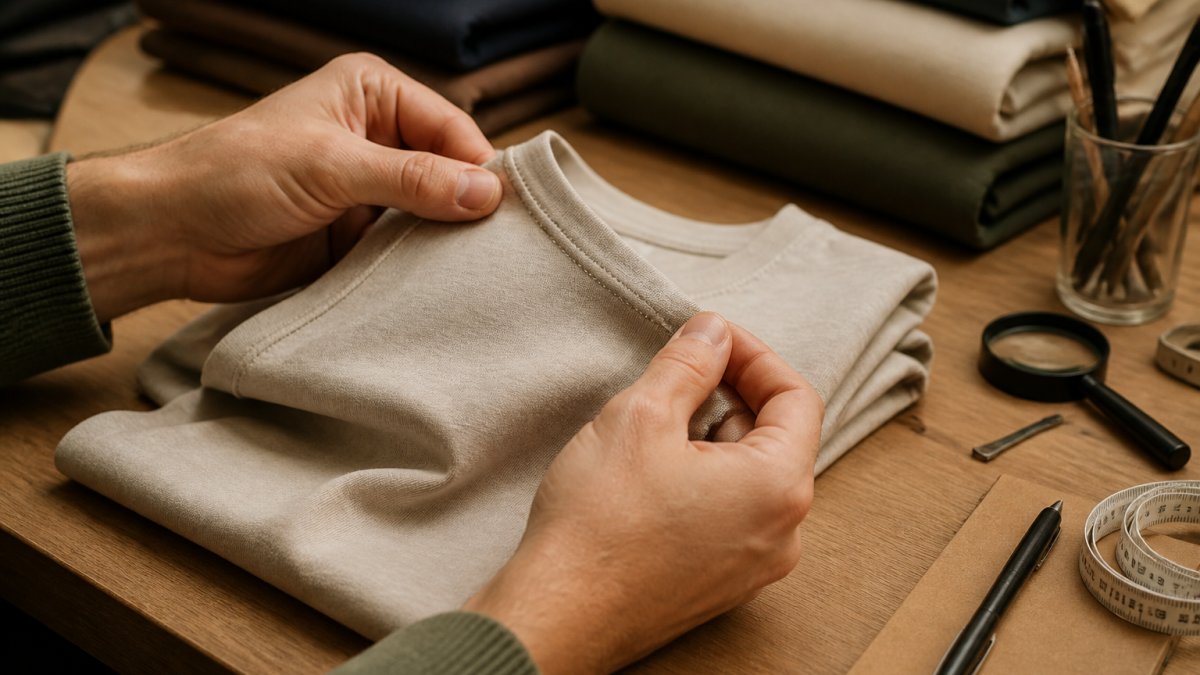
Run your finger along the seams of a quality shirt. Good stitching is tight, even, and consistent. Loose threads shouldn't hang out. The stitches should be small and uniform, not large and uneven.
Count the stitches per inch if you can. Quality shirts typically have 12-16 stitches per inch. Cheaper shirts often have 8-10. More stitches mean the seam is stronger and less likely to split.
Look at the seams from both sides. On the inside, the seam should be clean and straight. On the outside, it should be flat and even. If the seam puckers or waves, the shirt wasn't constructed well.
Reinforcement at Stress Points
Stress points are where seams take the most strain: the armholes, the collar, and the shoulder seams. Quality shirts reinforce these areas with extra stitching or a second seam.
Feel the armholes. A quality shirt has a reinforced seam that won't tear easily. The collar should be stitched multiple times, not just once. The shoulders should feel sturdy where the sleeves attach.
Check the side seams where the sleeves meet the body. This is a high-stress area. If it's only stitched once, it will fail. If it's reinforced, it will last.
Check Fit, Sizing, and Garment Shape
A quality shirt holds its shape through washing and wearing. It doesn't shrink unpredictably. The fit is true to size.
When you try on a shirt, it should fit comfortably without being tight. The sleeves should end at your wrist. The body shouldn't be so loose it looks baggy or so tight it restricts movement. The length should hit around your hip.
After washing, a quality shirt returns to its original shape and size. It doesn't shrink excessively or stretch out. This is where fabric quality and construction matter. A cheap shirt may shrink 5-10% or more. A quality shirt shrinks less than 3%.
Check the sizing chart before ordering online. Measure a shirt you already own and compare it to the measurements provided. Quality brands provide detailed sizing information because they stand behind their fit.
Are You Still Here Cat T-Shirt →
How to Tell if a Graphic Tee Is Good Quality
Graphic tees add personality, but the print quality matters as much as the shirt itself. A great design on a low-quality shirt will fade or crack within a few washes.
Print Quality and Durability
Feel the graphic with your fingertip. On a quality print, the design should feel smooth and integrated with the fabric, not thick and plasticky. The edges should be clean and sharp, not blurry or rough.
Look at the print under light. The colors should be vibrant and consistent. There shouldn't be gaps or white spots where the ink didn't fully cover. The print shouldn't look faded or washed out, even on a new shirt.
The best prints are direct-to-garment or screen-printed. These methods bond the ink to the fabric. Cheaper transfers peel and crack after a few washes.
Wash a graphic tee and check the print afterward. Quality prints stay vibrant. The edges stay sharp. Cheap prints fade, crack, and peel.
How to Buy a Good-Quality Shirt Online
Shopping online makes it harder to feel the fabric and inspect the stitching. But you can still assess quality if you know what to look for.
Read the product description carefully. Quality brands list the fabric weight, fiber content, and construction details.
Look at customer photos. Real customers show the shirt on their body, which reveals fit and how the fabric drapes. They show close-ups of the print and seams.
Check the return policy. Quality brands stand behind their products with generous return windows. A 30-day guarantee or free size exchanges show the brand is confident in what they're selling.
For Snarky Tails, we provide detailed sizing information, customer photos, and a 30-day guarantee with free size exchanges. We also track all orders so you know exactly when your shirt arrives.
Durability and Long-Term Performance
A quality shirt performs consistently over time. It survives regular washing without shrinking excessively, fading, or developing holes. It maintains its shape and comfort.
Test durability by washing the shirt multiple times. After five washes, a quality shirt should look almost identical to when it was new. The color should stay vibrant. The fabric should feel the same. The seams should be intact.
Pilling is common on lower-quality fabrics. If you notice small balls of fiber forming on the surface after a few washes, the fabric wasn't high quality. Quality fabrics resist pilling.
Care for your shirt properly to maximize its lifespan. Wash in cold water, turn the shirt inside out to protect prints, and air-dry when possible. Proper care extends the life of even a quality shirt.
Your In-Store Quality Inspection Checklist
Use this checklist when you're shopping in person. It takes two minutes and will save you from buying a low-quality shirt.
- Fabric weight: Hold the shirt. Does it feel substantial or thin and flimsy?
- Fiber content: Check the tag. Is it 100% cotton or a blend?
- Seam quality: Run your finger along the seams. Are they tight and even?
- Loose threads: Look for threads hanging from seams or hems.
- Reinforcement: Feel the armholes and collar. Are they reinforced?
- Print quality: Feel the graphic. Is it smooth or thick and plasticky?
- Color consistency: Does the print color look even and vibrant?
- Sizing: Check the tag. Does the shirt fit true to size?
- Shape: Does the shirt hold its shape or look wrinkled and misshapen?
If a shirt fails more than two of these checks, skip it. If it passes most of them, you've found a quality shirt worth buying.
How to tell if a shirt is high quality comes down to paying attention to details most people miss. Fabric weight, fiber content, seam construction, and print quality are the fundamentals.
At Snarky Tails, every shirt is made with these standards in mind. Our shirts are constructed with reinforced seams, quality stitching, and durable fabric so they survive playtime, cuddle sessions, and regular washing. We use 100% ring-spun cotton for softness and durability.
When you're ready to invest in a shirt that actually lasts, check out our collection of pet-themed tees. The Are You Still Here Cat T-Shirt is a perfect example of quality construction and comfort.
| Inspection Point | What to Look For | Quality Indicator |
|---|---|---|
| Fabric Weight | Substantial but not stiff | 180-200+ GSM |
| Fiber Content | 100% cotton or premium blend | Ring-spun, combed, or Pima cotton |
| Seams | Tight, even, consistent stitches | 12-16 stitches per inch |
| Loose Threads | Minimal or none | Clean, finished seams |
| Reinforcement | Extra stitching at stress points | Armholes, collar, shoulders reinforced |
| Print Quality | Smooth, vibrant, sharp edges | Direct-to-garment or screen-printed |
| Fit | True to size, comfortable | Returns to original shape after washing |
| Durability | Resists shrinking, fading, pilling | Looks new after multiple washes |
Frequently Asked Questions
What should I look for in a high-quality T-shirt?
Start with fabric weight, look for 180-200 GSM (grams per square meter) for durability. Check the fiber content label: 100% ring-spun cotton or cotton-blend fabrics hold up better than cheaper alternatives. Examine seams for tight, even stitching with no loose threads, and press the fabric between your fingers to feel density. A high-quality shirt should feel substantial without being stiff, hold its shape after washing, and show reinforcement at stress points like collar and armholes.
How can you tell if a graphic T-shirt print will last?
Run your finger across the print, it should feel smooth and bonded to the fabric, not raised or peeling. Look for sharp, clean edges on the design with no color bleeding or fading at the borders. Quality prints use direct-to-garment or screen-printing methods that penetrate the fabric rather than sitting on top. Check customer reviews specifically mentioning print durability after multiple washes, and ask the retailer about their print process and care instructions.
Which is better for a T-shirt, 180 GSM or 200 GSM?
200 GSM offers slightly more durability and weight, making it better for frequent wear and washing. 180 GSM is still quality, lighter and more breathable, ideal for warmer weather or layering. Both are considered premium compared to standard 150-160 GSM shirts. Your choice depends on climate and use: choose 200 GSM for everyday durability, 180 GSM for comfort in hot weather. Either beats budget alternatives significantly.
What does good stitching look like on a shirt?
Good stitching appears straight, even, and tight with consistent spacing between stitches, typically 8-10 stitches per inch. Look for no loose threads, puckering, or gaps in the seam line. Check that stitches don't pull the fabric or create visible dimpling. Double stitching (two parallel lines) at seams indicates reinforcement for durability. Run your finger along seams inside the shirt; they should feel smooth, not rough or frayed.