

Table of Contents
- Why Graphic Tees Fade and How to Prevent It
- Best Detergent for Graphic Tees
- Prepare Your Graphic Tees Before Washing
- How to Remove Stains from Graphic Shirts Without Damaging Print
- Washing Your Graphic Tees: Temperature and Cycle Settings
- Air Drying vs Machine Drying Graphic Tees
- What to Avoid When Washing Graphic Tees
- Your Complete Graphic Tee Laundry Routine
- Frequently Asked Questions
Last Updated: October 2, 2026
Why Graphic Tees Fade and How to Prevent It
Graphic tees fade because of heat, friction, and harsh chemicals. The print sits on top of the fabric, exposed to every wash cycle. UV light from the sun also breaks down the ink over time. Understanding what causes fading helps you protect your favorite designs.
Fading is preventable with the right approach, and your Snarky Tails graphic tees are built to last when cared for properly.
Fading happens through friction, heat, harsh chemicals, and sunlight exposure, all of which can be controlled with proper washing techniques.
The best defense is a multi-step strategy:
- Wash in cold water to minimize heat damage
- Use gentle cycles to reduce friction
- Choose mild detergents formulated for color protection
- Air dry instead of using high heat
- Avoid bleach and fabric softeners entirely
Graphic tees need special care because the print is the main attraction. Treat them differently, and they'll look new for years.
Best Detergent for Graphic Tees
The detergent you choose makes a significant difference. Regular laundry detergents contain harsh surfactants and optical brighteners that attack colored prints.
Look for detergents labeled as color-safe or designed for delicate fabrics. These formulas are gentler on both the graphic and the base fabric. They clean effectively without the aggressive chemicals that fade prints.
Key features to look for in a detergent:
- Color-safe formula that protects dyes
- Mild surfactants for gentle cleaning
- Free from bleach and optical brighteners
- Plant-based or eco-friendly options available
- Hypoallergenic if you have sensitive skin
Avoid these common detergent mistakes:
- Using regular all-purpose detergent (too harsh)
- Adding bleach or oxygen-based stain removers
- Using too much detergent (residue damages prints)
- Switching between harsh and mild products
Excess detergent leaves residue that dulls the print. Use about half the recommended amount for a normal load.
For tough stains, apply enzyme-based detergent directly to the stain and let it sit briefly before washing, rather than adding it to the entire wash cycle.
Prepare Your Graphic Tees Before Washing
Preparation prevents most damage. Taking five minutes before washing can add years to your shirt's life.
Turn Shirts Inside Out
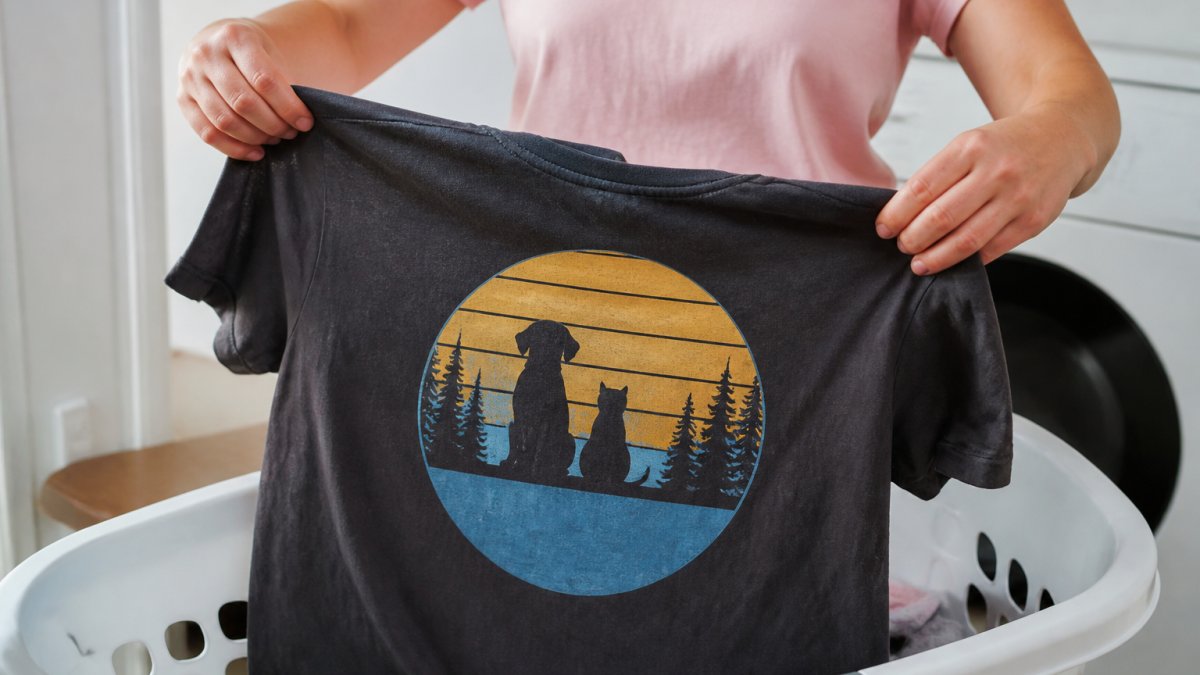
Turning your graphic tee inside out is the single most effective way to protect the print. When inside out, the graphic faces inward, away from agitation and friction. This is especially critical for screen-printed designs, which sit on top of the fabric. Always turn shirts inside out before washing.
Sort by Color and Fabric Type
Sort by fabric weight and print type: lightweight cotton graphics together, heavier blends separately, screen-printed designs in one load, and direct-to-garment prints in another. This ensures appropriate water temperatures and cycle speeds for each load.
Check for color bleeding by dampening a small hidden area of the print with cold water. If color transfers to a white cloth, wash that shirt separately or with similar colors only.
Remove Stains Safely
Start with cold water rinse from the back of the fabric. For stubborn stains, apply mild detergent and let sit 5-10 minutes before gently rubbing. Vinegar (equal parts with cold water) works as a gentle alternative. Never pre-treat the graphic itself, treat only the back side of the fabric.
How to Remove Stains from Graphic Shirts Without Damaging Print
Food stains: blot gently with damp cloth and rinse with cold water. Grease stains: apply mild dish soap, let sit 10-15 minutes, then rinse. Sweat stains: use one part vinegar to three parts cold water, let sit 15 minutes.
For set-in stains that won't budge, resist the urge to use bleach or oxygen-based cleaners. These products will fade or damage the print. Instead, try this approach:
- Soak the entire shirt in cold water with a tablespoon of mild detergent for 30 minutes
- Gently work the soapy water into the stained area with your fingers
- Rinse thoroughly with cold water
- Repeat if necessary
Never put a stained graphic tee in the dryer. Heat sets stains permanently. If the stain doesn't come out after cold-water treatment, air dry the shirt and reassess. Sometimes stains look worse when wet.
Washing Your Graphic Tees: Temperature and Cycle Settings
Water temperature and wash cycle speed are the two biggest factors in how to wash graphic tees without fading. Get these right, and your graphic tees will maintain their color through dozens of washes.
Use Cold Water
Cold water is non-negotiable for graphic tees. Heat damages the print in multiple ways. It opens the fibers, allowing ink to escape. It also increases friction and agitation. Cold water does the opposite.
Cold water washing is effective because:
- It prevents heat damage to the print
- It reduces friction between fibers
- It minimizes color bleeding
- It preserves both fabric and ink integrity
Most detergents work just as well in cold water as in warm water. Modern formulations are designed for cold-water performance. If you're concerned about cleaning power, use a color-safe detergent specifically formulated for cold water.
Always wash graphic tees in cold water, even if the care tag suggests warm water. The print's longevity matters more than a marginal cleaning difference.
Select a Gentle or Delicate Cycle
The gentle or delicate cycle reduces agitation and spin speed. This means less friction against the print. Standard wash cycles are designed for sturdy fabrics that can handle vigorous agitation. Graphic tees need something gentler.
Delicate cycles typically:
- Use slower drum rotation
- Reduce spin speed to minimize wringing
- Shorten wash duration
- Lower water volume relative to load size
The result is thorough cleaning with minimal mechanical stress on the print.
Air Drying vs Machine Drying Graphic Tees
The dryer is one of the biggest threats to graphic tees. Heat damages both the print and the fabric. Air drying takes longer but preserves your shirt's lifespan dramatically.
Machine drying uses high heat that:
- Damages the print through thermal stress
- Shrinks the fabric permanently
- Increases friction as clothes tumble
- Can cause print cracking or peeling
The best approach for air drying:
- Hang the shirt on a hanger or clothesline
- Keep it out of direct sunlight
- Ensure good air circulation
- Avoid wringing or twisting the fabric
What to Avoid When Washing Graphic Tees
Certain practices damage graphic tees faster than anything else. Knowing what to avoid is as important as knowing what to do.
Never use these products:
- Bleach (destroys both print and fabric color)
- Oxygen-based cleaners (fade prints over time)
- Fabric softeners (leave residue that dulls the print)
- Scent boosters (can damage ink and fabric)
- Starch (creates stiffness and print cracking)
Never use these washing methods:
- Hot water (accelerates fading and shrinkage)
- Heavy-duty cycles (excessive agitation damages prints)
- Overloading the washer (increases friction)
- Dry cleaning (harsh chemicals damage prints)
- Ironing directly on the graphic (melts and damages ink)
Never dry graphic tees this way:
- Machine drying on high heat (most common mistake)
- Direct sunlight exposure (UV fades prints)
- Near heat sources like radiators or vents
- In a dryer with other heavy items (friction damage)
Your Complete Graphic Tee Laundry Routine
Putting it all together creates a simple routine that protects your graphic tees every single wash. This process takes just a few extra minutes but adds years to your shirt's life.
| Step | Action | Why It Matters |
|---|---|---|
| 1 | Turn shirt inside out | Protects print from direct friction |
| 2 | Check for stains | Treats stains before washing |
| 3 | Sort by color and weight | Prevents color bleeding and ensures proper cycle |
| 4 | Pre-treat stains if needed | Removes stains gently without harsh chemicals |
| 5 | Load washer loosely | Reduces friction between clothes |
| 6 | Use cold water | Prevents heat damage to print and fabric |
| 7 | Select delicate cycle | Minimizes agitation and spin speed |
| 8 | Add color-safe detergent | Cleans without fading print |
| 9 | Use half the detergent amount | Prevents residue buildup on fabric |
| 10 | Air dry on hanger or line | Eliminates heat damage entirely |
Frequently Asked Questions
How do you stop graphic tees from fading?
The key is protecting the print from friction and heat. Wash graphic tees inside out in cold water on a gentle cycle, use a mild, color-safe detergent, and air dry instead of using a machine dryer. Heat damage from the dryer is one of the biggest culprits behind fading. Avoid bleach and fabric softeners, which break down the print material. Most prints fade fastest in the first few washes, so these steps matter most early on.
What type of detergent should I use to wash graphic tees?
Choose a mild, color-safe detergent designed for delicate fabrics. Look for products labeled 'gentle' or 'for delicates' that skip harsh chemicals and optical brighteners. Avoid regular detergents with heavy surfactants that can strip color and damage screen prints or direct-to-garment prints. Use less detergent than you normally would, a quarter to half the recommended amount is enough. Some pet parents prefer liquid detergents over powders, as they dissolve more easily and rinse out completely.
Does hot water ruin graphic tees?
Yes. Hot water accelerates fading and increases the risk of print cracking, especially on screen-printed designs. Heat opens up fabric fibers, making them more prone to color loss and causing the print to become brittle. Always use cold water for graphic tees. Cold water washing is just as effective for cleaning and is gentler on both the print and the garment itself. If you're concerned about stains, treat them with a pre-wash solution before putting the shirt in cold water.
Can you put graphic tees in the dryer?
Avoid machine drying graphic tees whenever possible. Tumble dry heat causes print cracking, fading, and shrinkage. If you must use a dryer, use the lowest heat setting or air-dry setting, and remove the shirt while still slightly damp. Air drying is the best option, hang the shirt on a hanger in indirect sunlight or lay it flat on a clean surface. Air drying takes longer but preserves the print, color, and overall textile longevity far better than any dryer cycle.