

Table of Contents
- Premium vs. Cheap Cotton T-Shirts: The Real Differences
- Fabric Weight and GSM: Why Numbers Matter
- Ring-Spun vs. Carded Cotton: Construction Quality Explained
- How to Tell if a T-Shirt Is High Quality
- Cost Per Wear: Why Premium T-Shirts Deliver Better Value
- Best Comfortable Shirts for Working From Home
- Durability, Shrinkage, and Long-Term Performance
- Frequently Asked Questions
Last Updated: September 23, 2026
Premium vs. Cheap Cotton T-Shirts: The Real Differences
A basic cotton t-shirt might cost $10 while a premium one runs $30 or more. The real question is what you're actually paying for when you choose premium vs cheap cotton t-shirts. At Snarky Tails, we've analyzed what separates a t-shirt that falls apart after five washes from one that still feels soft after 50.

Three core factors separate them: the cotton itself, construction quality, and durability. A cheap t-shirt feels fine initially but the fabric breaks down, the neckline stretches, and color fades. A premium shirt holds its shape, maintains softness, and improves with age.
Fabric Weight and GSM: Why Numbers Matter
Fabric weight, measured in grams per square meter (GSM), is one of the most reliable indicators of t-shirt quality. A cheap t-shirt typically weighs between 4.0 and 4.5 ounces, which translates to roughly 135-150 GSM. Premium shirts usually fall between 5.0 and 6.0 ounces, or 170-200 GSM.

The difference sounds small, but it's substantial. A heavier fabric resists pilling, holds dye better, and maintains its shape through repeated washing. Lighter fabrics feel thin and transparent, especially after a few washes. When you hold a premium t-shirt, it should feel substantial without being stiff. The Snarky Tails "Are You Still Here Cat T-Shirt" uses a 4.5 oz weight with ring-spun cotton construction, giving it that broken-in comfort.
Here's what the weight difference means in practice:
| Fabric Weight | Typical Price | Durability | Best For | Common Issues |
|---|---|---|---|---|
| 4.0-4.5 oz (130-150 GSM) | $8-15 | Moderate, fades faster | Basic casual wear, disposable use | Pilling, fading, neckline stretching |
| 5.0-5.5 oz (170-180 GSM) | $18-28 | High, resists pilling | Everyday wear, working from home | Slight shrinkage if not pre-shrunk |
| 6.0+ oz (200+ GSM) | $28-45+ | Very high, lasts years | Premium everyday, investment pieces | Can feel stiff initially |
Lighter fabrics suit summer wear, but a 4.5 oz premium shirt outperforms a 4.5 oz cheap shirt due to cotton quality and construction.
:::pro-tip Check the product label for weight in ounces or GSM. If it's not listed, that's often a red flag. Manufacturers of quality t-shirts are transparent about this specification because it correlates directly with durability.
Ring-Spun vs. Carded Cotton: Construction Quality Explained
Not all cotton is created equal. The way cotton fibers are processed before weaving determines how soft, durable, and long-lasting the final shirt becomes. The two most common methods are ring-spun and carded cotton.
Ring-spun cotton twists fibers into longer, stronger yarn, creating softer, more durable fabric resistant to pilling. Fewer loose fibers mean the shirt maintains its smooth finish through many washes.
Carded cotton is faster and cheaper but pills easily and loses softness quickly. Loose fibers break down with friction, creating a worn, fuzzy look within weeks.
Premium t-shirts use ring-spun cotton; cheap ones use carded cotton or blends. The "Are You Still Here Cat T-Shirt" from Snarky Tails is 100% ring-spun cotton, maintaining softness after repeated washing. When comparing premium vs cheap cotton t-shirts, the ring-spun shirt feels smoother and more uniform; the carded shirt feels fuzzy or textured, signaling breakdown.

How to Tell if a T-Shirt Is High Quality
Quality indicators go beyond price and brand reputation. You can evaluate a t-shirt in less than a minute by checking a few specific details.
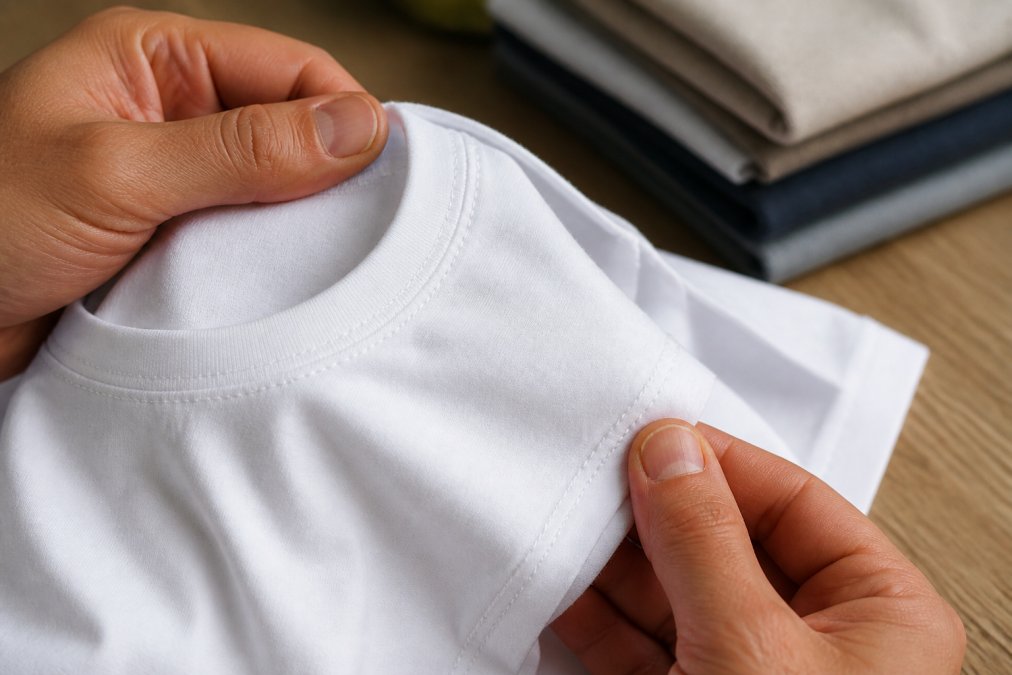
Check the neckline: Cheap t-shirts have thin, single-stitched necklines that stretch quickly. Premium shirts use reinforced double or triple stitching with internal stabilizing fabric.
Examine the seams: Cheap t-shirts show uneven stitching and loose threads. Premium shirts have consistent, tight stitch density.
Look at the hem: Cheap hems curl after washing; premium hems are folded and double-stitched, staying flat for years.
Feel the weight: The shirt should feel substantial, not papery.
Check for tubular construction:
Cost Per Wear: Why Premium T-Shirts Deliver Better Value
A cheap $12 t-shirt lasting 30 washes costs $0.40 per wear. A premium $30 t-shirt lasting 150 washes costs $0.20 per wear, half the cost and better appearance throughout. At 200+ washes, the premium shirt costs $0.15 per wear. Snarky Tails shirts are made with ring-spun cotton and reinforced construction.
Best Comfortable Shirts for Working From Home
If you're spending eight hours a day in a t-shirt, comfort becomes non-negotiable, but comfort isn't one-size-fits-all. The ideal work-from-home shirt depends on your body type, climate, and sensitivity to fabric treatments. This is where premium construction reveals advantages that cheap alternatives simply cannot match.
Cheap t-shirts often use synthetic blends or low-quality cotton treated with chemical finishes that trap heat and moisture, feeling clammy during extended wear. Loose fibers irritate skin and finishes break down after a few washes, leaving the shirt stiff. Premium t-shirts use 100% cotton with minimal chemical treatment; ring-spun fibers create a smooth surface that doesn't irritate skin during all-day wear.
Body-Type Specific Recommendations
Are You Still Here Cat T-Shirt →
Comfort for working from home also depends on fit, which varies by body type:
Athletic builds: Fitted premium t-shirts in 5.5-6.0 oz prevent clinging during video calls. Cheap lightweight shirts stretch and cling uncomfortably.
Slim builds: Relaxed-fit premium t-shirts in 5.0-5.5 oz prevent transparency. Cheap shirts feel papery and require layering.
Larger builds: Relaxed premium t-shirts in 5.5-6.0 oz distribute stress evenly, preventing seam failure. Cheap lightweight shirts fail at side seams within weeks.
Cheap t-shirts are often treated with formaldehyde-based finishes, heavy-metal dyes, or synthetic sizing agents that irritate sensitive skin.
Cheap t-shirts develop wrinkles, bunching, or stretching within the first hour, requiring constant adjustment during video calls. Premium t-shirts maintain their fit all day due to heavier fabric and reinforced seams.
When choosing a t-shirt for all-day wear: prioritize 5.0-6.0 oz fabric weight, ring-spun construction, appropriate fit for your body type, OEKO-TEX certification if you have sensitive skin, pre-shrinking verification, and reinforced seams. Premium t-shirts feel better on day one and remain comfortable for months. Cheap t-shirts feel acceptable initially but become progressively less comfortable as chemical treatments break down and fibers degrade.
Durability, Shrinkage, and Long-Term Performance
Premium and cheap t-shirts diverge most dramatically in durability. Shrinkage rates, stitch integrity, and color retention across wash cycles predict actual lifespan.
Shrinkage is measurable and reveals stark differences: cheap t-shirts shrink 9-15% in length and 7-11% in width, becoming noticeably short and tight by wash three. Mid-range pre-shrunk shirts shrink 2-4% total. Premium pre-shrunk shirts shrink under 2%.
Wash-Test Durability: Stitch and Seam Integrity
Stitch count and seam construction predict how long a shirt survives repeated washing. Premium manufacturers typically use 12-16 stitches per inch on side seams and reinforced necklines with 18-20 stitches per inch.
When tested through 50 washes:
- Cheap t-shirts: Side seams often show visible fraying by wash 30-40. Necklines begin to curl or stretch noticeably by wash 20. Armhole seams may develop small tears by wash 50.
- Premium t-shirts: Side seams remain intact and flat. Necklines hold their shape. Armholes show no deterioration.
Color Retention and Dye Quality
- Cheap black t-shirts: Noticeably faded to dark gray by wash 15-20. By wash 30, the color is visibly lighter. Repeated washing in warm water accelerates fading.
- Premium black t-shirts: Remain deep black through 50+ washes. Slight fading may occur by wash 100, but the color remains rich and dark.
Pilling and Surface Degradation
- Cheap t-shirts: Noticeable pilling appears by wash 5-8, especially in high-friction areas (underarms, torso). By wash 20, the entire shirt surface may have visible pills.
- Premium t-shirts: Minimal to no pilling through 50 washes. Even after 100+ washes, pilling is rare unless the shirt is subjected to extreme friction (e.g., worn under a rough jacket daily).
Neckline Integrity: The Most Visible Failure Point
- Cheap t-shirts: Necklines visibly stretch within 10-15 wears. By wash 20, the neckline may sag 0.5-1 inch lower than intended, changing the shirt's silhouette and making it look worn.
- Premium t-shirts with reinforced necklines: Maintain their original neckline shape through 100+ washes. The double or triple stitching and internal stabilizing fabric distribute stress across a larger area, preventing stretching.
Care Practices That Extend Lifespan
While premium shirts are more durable by design, care matters for both:
- Wash in cold water to minimize dye bleeding and fiber stress.
- Turn shirts inside out to reduce surface friction and pilling.
- Use mild detergent; harsh chemicals degrade fibers and dyes.
- Air dry when possible; heat from dryers accelerates shrinkage and weakens fibers.
- Avoid fabric softeners, which coat fibers and reduce breathability.
Frequently Asked Questions
What's the difference between ring-spun and carded cotton?
Ring-spun cotton uses longer fiber lengths twisted tightly together, creating stronger, softer yarn with less pilling. Carded cotton uses shorter fibers with less processing, making it less durable and prone to surface fuzz. Premium t-shirts almost always use ring-spun cotton because it survives more wash cycles and maintains its shape better over time.
Do premium t-shirts actually last longer than cheap ones?
Yes. Premium t-shirts with higher GSM (grams per square meter), ring-spun cotton, and reinforced seams hold their shape and color significantly longer. A budget t-shirt may fade, shrink unevenly, or develop holes within 20-30 washes, while premium options maintain structure and appearance for 50+ washes. The cost per wear often favors premium shirts when you factor in replacement frequency.
How much should I expect a cotton t-shirt to shrink?
Quality matters here. Budget cotton t-shirts often shrink 5-10% in length and width, especially in the first few washes. Premium ring-spun cotton with proper manufacturing typically shrinks 2-3% maximum. Washing in cold water and air-drying reduces shrinkage significantly. Always check the label for pre-shrinking information and follow care instructions to minimize loss.
What should I look for in a comfortable shirt for working from home?
Look for lightweight fabric (4.5-5 oz) with a relaxed, true-to-size fit that doesn't restrict movement. Ring-spun cotton offers superior softness straight out of the package without stiffness. Breathability and drape matter too; a quality t-shirt should feel like a favorite piece you've owned for years, not something new and stiff.